Why Losing the Porsche 718 Is a Tragedy
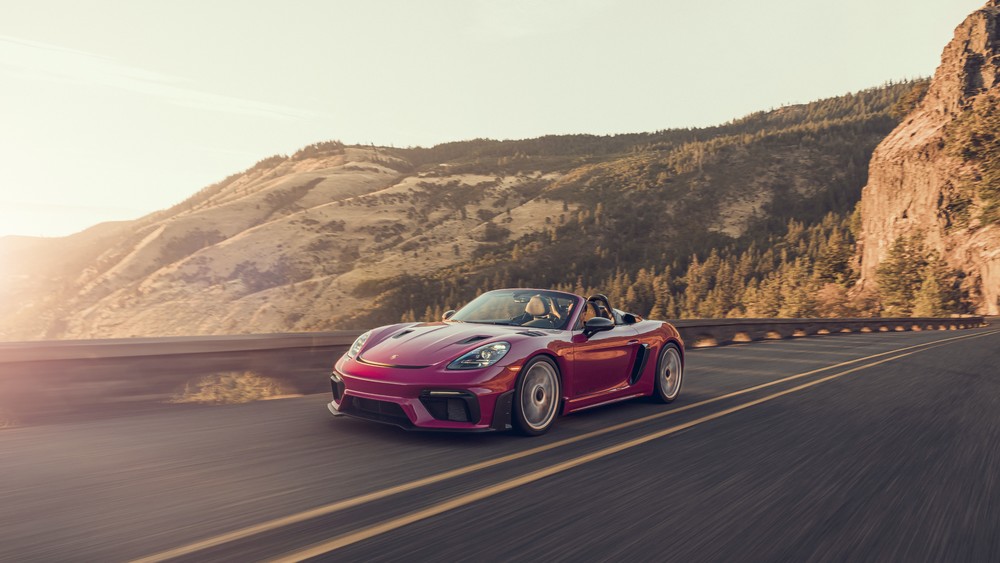
The best driver's car Porsche has ever made
The Porsche 718 Cayman and Boxster were always the quiet overachievers in Stuttgart's lineup. While the 911 commanded the heritage and the headlines, the mid-engine 718 delivered something the 911 never could: perfect balance. With the engine mounted behind the driver and ahead of the rear axle — close enough to feel its heat radiating through the bulkhead on a hard drive — the 718 had a mechanical purity that no front- or rear-engine car can replicate. You sit inside the car's center of gravity, and every input flows through the chassis with an immediacy that feels almost neural.
Porsche knew this was a problem. The 718 was so good that it threatened to embarrass the 911. That tension defined the car's entire existence — and ultimately sealed its fate.
| Engine (GTS 4.0) | 4.0L naturally aspirated flat-six |
|---|---|
| Power | 394 hp @ 7,000 rpm |
| Torque | 309 lb-ft @ 5,000 rpm |
| Redline | 7,800 rpm |
| Transmission | 6-speed manual or 7-speed PDK |
| Curb Weight | 3,153 lbs (Cayman GTS 4.0, manual) |
| MSRP (2024 GTS 4.0) | $91,450 |
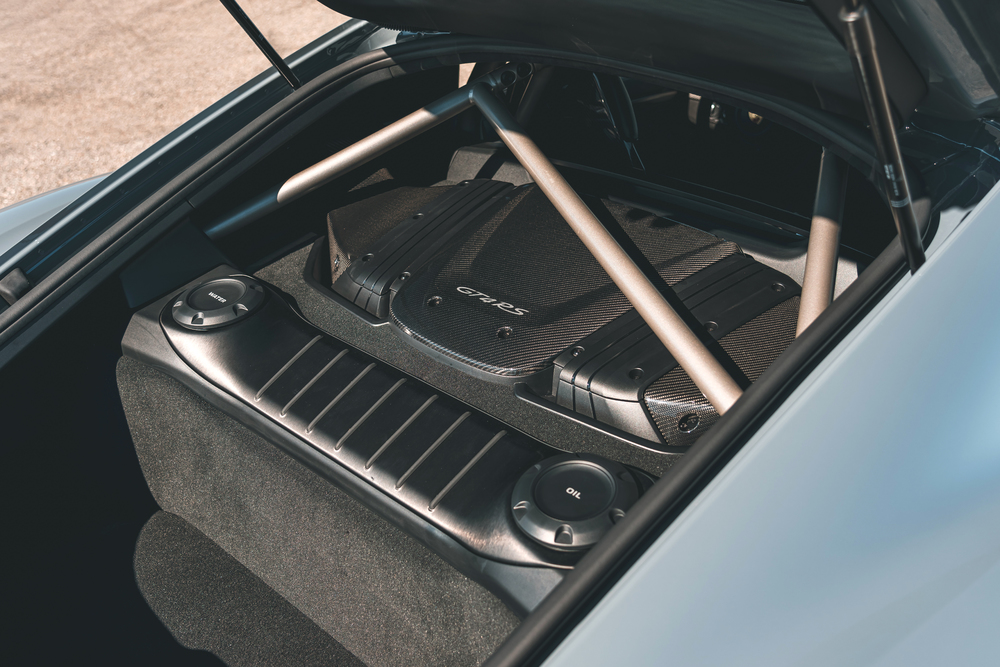
The flat-four detour and the flat-six redemption
When the 718 generation launched in 2017, Porsche replaced the beloved naturally aspirated flat-six with a turbocharged flat-four. Enthusiasts were furious. The turbo-four was faster on paper — more torque, better fuel economy — but it lost the top-end scream and linear power delivery that made the Cayman special. It sounded like a Subaru with a head cold. Gone was the hollow, mechanical wail that built behind your head as the revs climbed; in its place, a muffled, boosted drone that peaked early and had nothing left to give at the top of the tachometer. The numbers were better. The feeling was worse. And feeling is the entire point of this car.
Porsche heard the complaints and responded with the GTS 4.0, Spyder, and GT4 — variants that brought back a 4.0-liter naturally aspirated flat-six derived from the 911 GT3's engine. The moment you heard it, you knew Porsche had made things right. The flat-six doesn't just sound good — it sounds honest. There's no turbo whistle masking the mechanical voice of the engine. Every rpm is earned, the note rising in a clean, linear crescendo from a baritone idle burble to a full-throated howl that reverberates through the cabin and vibrates in your molars. The flat-six redemption arc was just beginning — and its climax would come with the GT4 RS and Spyder RS.
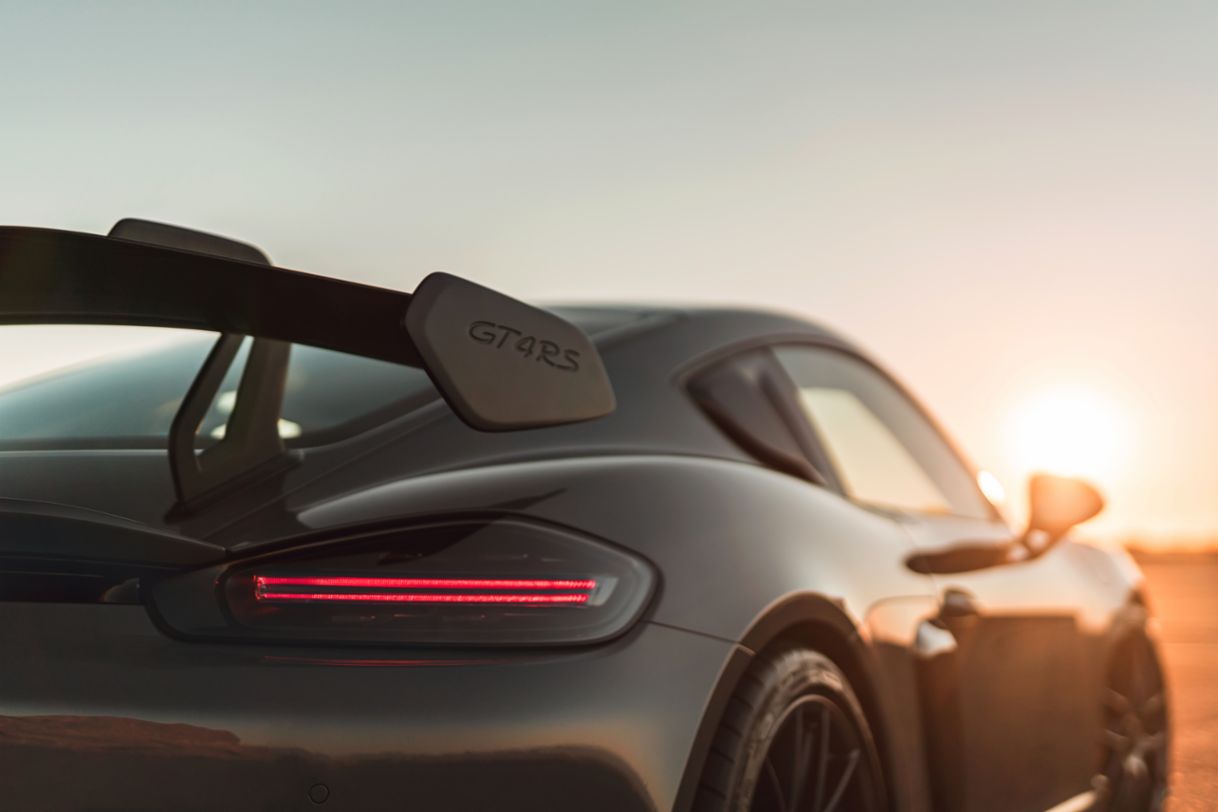
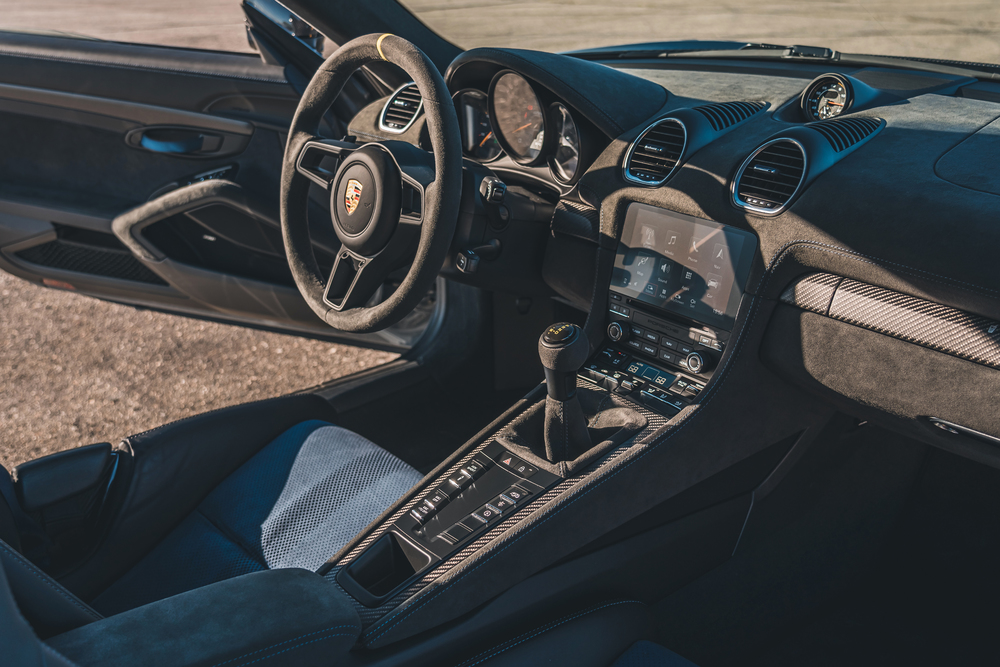
The swan song: GT4 RS and Spyder RS
The GT4 RS and Spyder RS were the final celebration — the tour de force, the magnum opus of the Cayman, the Boxster, and the mid-engine dream. Porsche took the 4.0-liter flat-six from the 911 GT3, gave it the full GT3 intake system with individual throttle bodies, and let it scream to 9,000 rpm — producing 493 hp in a chassis hundreds of pounds lighter than the car it borrowed the engine from. The intake trumpets sit inches behind your head, separated from the cabin by nothing but a thin glass window. At full throttle, the sound is not something you hear — it's something that happens to you. A raw, mechanical shriek that bypasses your ears and lands directly in your nervous system. The GT4 RS laps the Nürburgring faster than the previous-generation 911 GT3 — a mid-engine Porsche finally, definitively proving it could outrun the car it was never supposed to threaten.
The result was something that left even the most seasoned automotive journalists reaching for superlatives.
This can only be epic, and it is! — Richard Hammond
Aspirational.
What dreams are made of.
That's what this car is — it's magic.
You just want to keep driving it, and driving it, and driving it.
This car places somewhere at the very top of the hallowed halls of Porsche history.
— Throttle House
Intoxicating — the kind of sound that makes you laugh out loud alone in a car. — Chris Harris
They weren't being hyperbolic. The GT4 RS and Spyder RS are, by any objective measure, among the greatest driver's cars ever built — cars so good they make you question why the 911 GT3 costs more. The Spyder RS takes everything the GT4 RS offers and removes the roof, letting the flat-six's wail pour over you unfiltered as it climbs to nine thousand. These were not incremental upgrades over the GTS 4.0 — they were a different species entirely, the 718 finally allowed to show what it was always capable of.
Mid-engine magic
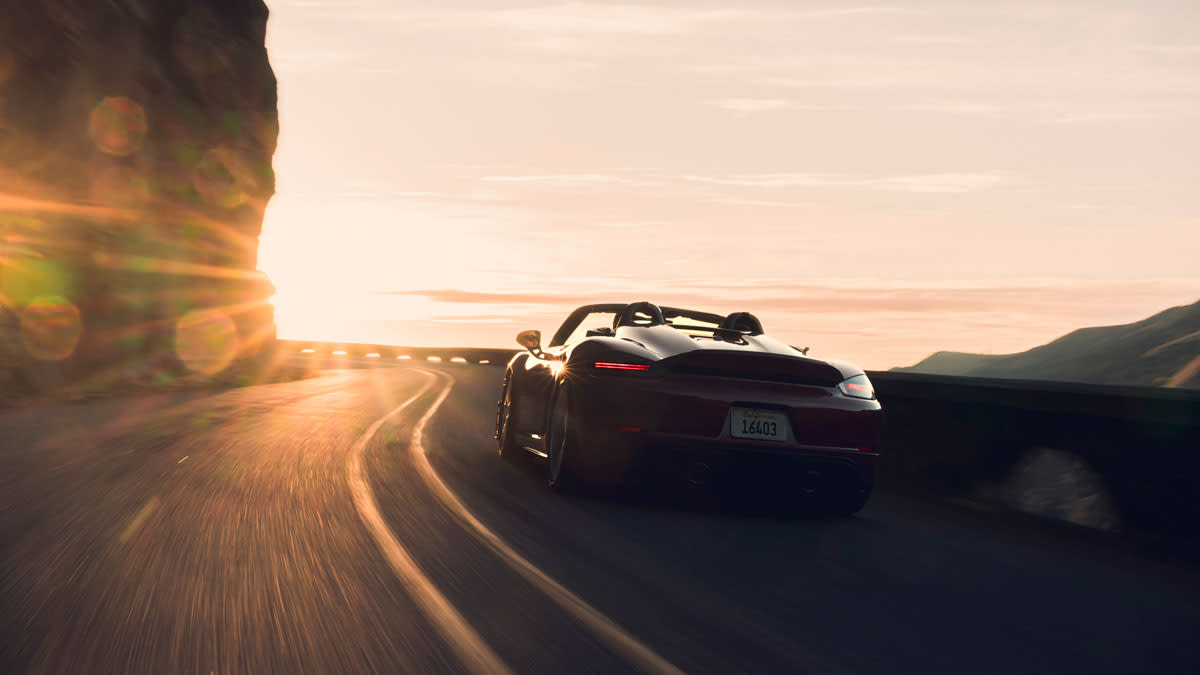
The advantage of a mid-engine layout is not just about balance — it's about confidence. In a 718, you can feel the car rotating around you rather than pushing or pulling you through a corner. Turn-in is instantaneous — a flick of the wrist and the nose darts inward with zero hesitation, the rear following in perfect sympathy. The rear end is planted but not inert; you can feel it working, adjusting, breathing with the surface of the road. And the steering, even with electric assist, transmits more information than any modern car has a right to. You feel the texture of the asphalt through the rim. You feel the front tires load up and the contact patch stretch as you add lock. The car talks to you through your fingertips.
Where a 911 requires you to manage its rear-biased weight distribution — especially in the rain or at the limit — the 718 simply goes where you point it. It makes you faster because it makes you braver. Every corner becomes an invitation rather than a negotiation. Trail-brake into a decreasing-radius turn and the 718 tucks its nose in tighter, rotating on its center with a precision that feels choreographed. The brake pedal is firm and progressive, the throttle response immediate and linear. There's no delay, no electronic interpretation — just a direct, analog link between your intentions and the car's behavior.
Why it's gone
Porsche has confirmed the next-generation 718 replacement will be fully electric. The reasoning is straightforward: emissions regulations, corporate fleet averages, and the reality that EVs sell in the segments Porsche needs to grow. The Macan went electric first, and the 718's slot was next.
But the real reason the 718 is gone is the same reason it was always held back: it was too good. A mid-engine Porsche with a flat-six, priced below the 911, threatened the hierarchy. Porsche could never give the 718 more power than the equivalent 911 without cannibalizing the flagship. The electric pivot solves that problem permanently — an electric sports car is a fundamentally different proposition that doesn't compete with the 911 on the same axis.
The 718 was the car Porsche's engineers wanted to make the best car in the lineup. Corporate politics and the 911's sacred status meant they couldn't — but they came closer than anyone expected.
What we lose
An electric 718 replacement might be faster. It will certainly be heavier. It will not sound like the GT4 RS's flat-six approaching 9,000 rpm — that crescendo of mechanical fury building inches behind your skull through the intake trumpets. It will not have the Spyder RS's open-air wail as you chase the redline through a canyon. It will not weigh 3,100 pounds. It will not crackle and pop on the overrun as you lift off the throttle into a braking zone. The things that made the 718 special — lightness, mechanical feedback, a naturally aspirated engine that rewarded every last rpm with a sound that made strangers turn their heads — are precisely the things that electrification eliminates.
The GT4 RS and Spyder RS will be remembered as the pinnacle — but the entire flat-six 718 lineup, from the GTS 4.0 to the GT4 to the Spyder, represents the last of something important: the last affordable, mid-engine, naturally aspirated Porsche sports cars. There won't be another. The sound of the flat-six at full song, the feel of the chassis rotating beneath you, the click of the shifter into third as you exit a corner — these are sensations that belong to a specific moment in time, and that moment is over.
The verdict
The Porsche 718, crowned by the GT4 RS and Spyder RS, was the best driver's car Porsche has ever made. Not the fastest, not the most prestigious, but the most rewarding to drive at the limit — the car that made you feel most alive with your hands on the wheel. Its mid-engine layout gave it a mechanical advantage the 911 can never match, and the RS cars' 9,000-rpm flat-six with individual throttle bodies was one of the last great road-car engines: an engine you felt in your chest, heard in your bones, and chased to redline on every single upshift because the sound demanded it. Losing it to electrification isn't just the end of a model — it's the end of a philosophy. The 718 proved that lighter, simpler, and more balanced is better. That lesson deserves to outlive the car.