The GT3 S/C Is an Upgrade in Every Way That Matters
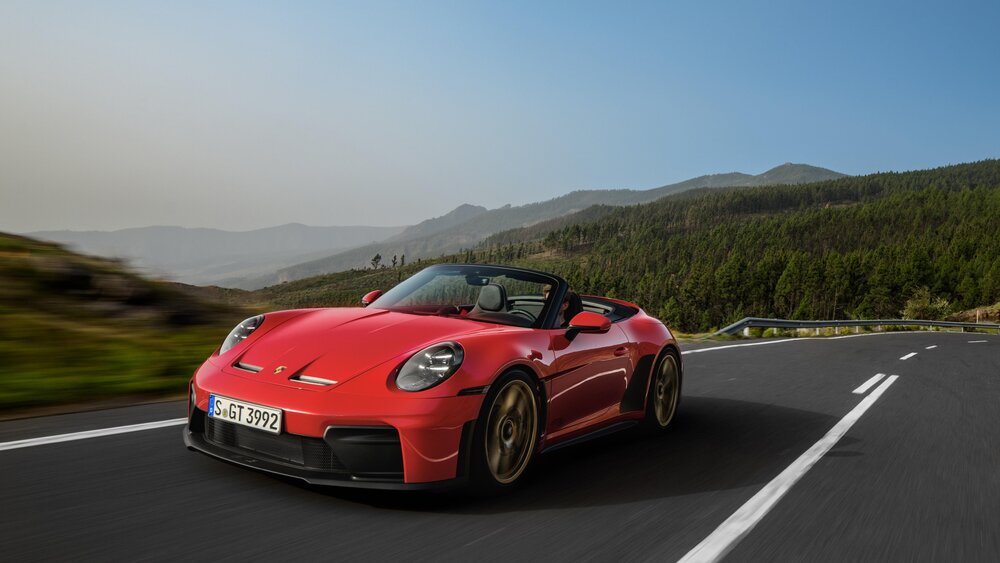
A convertible GT3
For decades, the 911 GT3 existed exclusively as a coupe. The reasoning was always the same: structural rigidity, weight savings, motorsport credibility. A GT3 was a serious car for serious drivers, and serious drivers didn't need the sky. But that logic has a blind spot. The GT3 has always been about connection — a naturally aspirated flat-six screaming to 9,000 rpm, a manual gearbox clicking through its gate, rear-wheel drive pushing you through corners with nothing but mechanical grip and your own nerve. The roof was the last barrier between the driver and the engine's voice, and now Porsche has removed it.
The 911 GT3 Sport Cabriolet — GT3 S/C — is the car that should have existed all along. Drop the top and the MA1.75's intake howl pours over your shoulders unfiltered. The flat-six doesn't just get louder without a roof — it gets closer. You hear the six individual throttle bodies breathing behind you, the solid valve lifters ticking at idle, the way the exhaust note shifts from a hollow bark to a full-throated scream as the tachometer sweeps past 7,000. In a coupe, you hear the engine through insulation, glass, and headliner. In the S/C, you hear the engine through air. The difference is not volume — it is intimacy.
The S/C name itself is a revival. Porsche used the Sport Cabriolet badge on 911s between 1978 and 1983, before the Cabriolet became a permanent fixture in the lineup. Bringing it back for the first open-top GT3 is a deliberate nod to the era when an open Porsche was something rare and intentional — not just another configuration in the order guide.
| Engine | 4.0L naturally aspirated flat-six (MA1.75) |
|---|---|
| Power | 503 hp @ 8,400 rpm |
| Torque | 450 Nm @ 6,100 rpm |
| Redline | 9,000 rpm |
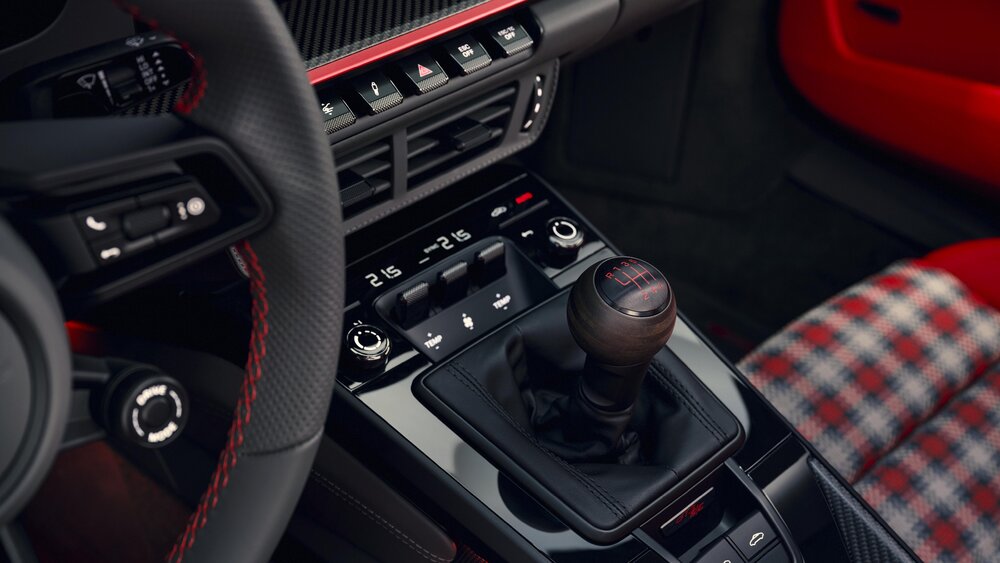
| Transmission | 6-speed manual (only) |
| Curb Weight | 1,497 kg (lightest open-top 911) |
| 0-100 kph | 3.9 seconds |
| Top Speed | 313 kph (194 mph) |
| MSRP | $273,000 |
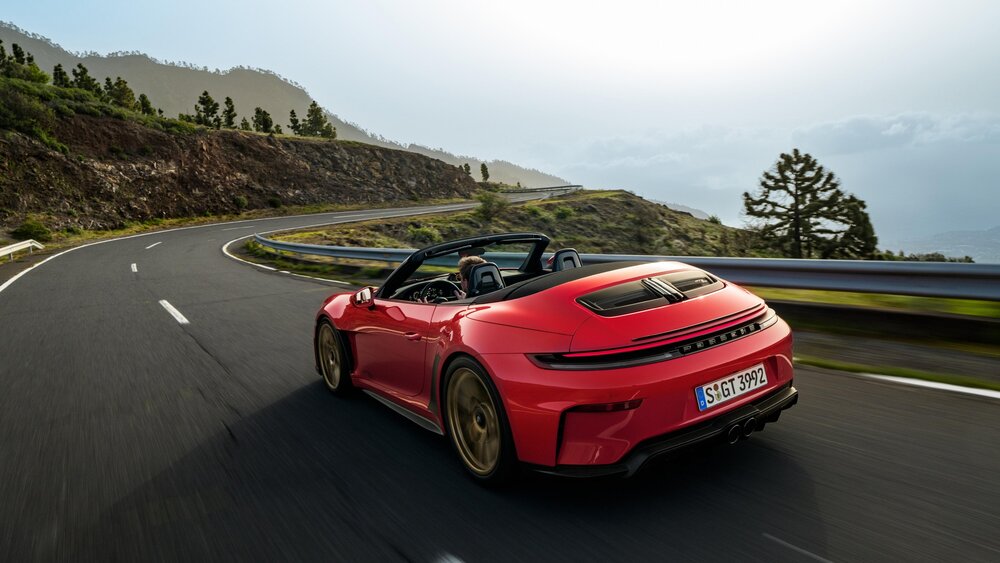
The MA1.75: put it in everything
The 4.0-liter MA1.75 is not just an engine — it's the argument against electrification distilled into cast aluminum and forged steel. Six individual throttle bodies, one per cylinder, feed air directly into combustion chambers with a 102 mm bore and a short 81.5 mm stroke — the geometry of an engine designed to rev. Solid valve lifters replace the hydraulic units found in lesser Porsche sixes, eliminating the compliance that would limit piston speed at the top of the range. A dry-sump lubrication system with an external oil tank keeps the engine fed under sustained lateral g-forces. Plasma-coated cylinder liners reduce friction. The result is an engine that spins to 9,000 rpm not as a party trick, but as a natural consequence of its architecture.
The peak numbers — 503 hp at 8,400 rpm, 450 Nm at 6,100 rpm — tell only half the story. What matters is the shape of the power curve. There is no turbo lag, no sudden boost threshold, no electronic trickery reshaping the torque delivery. Power builds in a smooth, linear arc from idle to redline, rewarding every additional revolution with more noise, more thrust, more reason to keep your foot in it. The MA1.75 makes its case between 6,000 and 9,000 rpm, the range where turbocharged engines have long since run out of breath and resorted to fuel enrichment and retarded timing to protect their turbines. This is where naturally aspirated engines justify their existence, and the MA1.75 justifies it more convincingly than almost any road-car engine in production.
It now powers the GT3, the GT3 RS, the 718 Cayman GT4 RS, the 718 Spyder RS, and the GT3 S/C. Every car it touches becomes something special. Every new application is good news. The more cars Porsche builds around this engine, the better the world gets.
Speedster vs Sport Cabriolet
The inevitable comparison is to the 991 Speedster — the last open-top GT Porsche, built in 2019 as a limited-run farewell to the 991 generation. On paper, the cars share a philosophy: naturally aspirated flat-six, manual gearbox, rear-wheel drive, open roof, driver-focused intent. In practice, they are very different propositions.
The Speedster was limited to 1,948 units — a number chosen to honor the year Porsche's 356 "Number 1" received its operating license. The GT3 S/C is not a limited edition. Porsche will build as many as the market demands. That alone changes the calculus. The Speedster was an instant collector's item, priced at $274,500 and trading above sticker before the first customer took delivery. The GT3 S/C, at $273,000, is positioned almost identically on price — but without the artificial scarcity that turns a sports car into a speculative asset. You can order one to drive, not to store.
The Speedster used the 991.2 GT3's 4.0-liter flat-six — the previous-generation 9A1 unit producing 502 hp with 460 Nm. The S/C uses the current MA1.75, with 503 hp and 450 Nm. The numbers are nearly identical, but the MA1.75 benefits from seven years of refinement — revised intake geometry, updated engine management, and the accumulated development from the GT3 RS and GT4 RS programs. It is, by every measure, the more evolved engine.
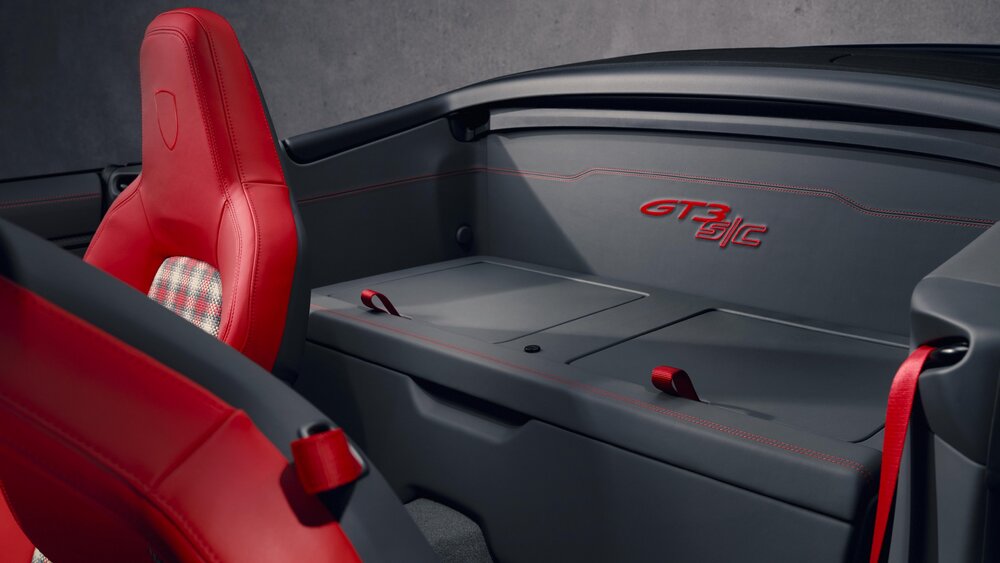
Then there is the question of practicality. The Speedster was a strict two-seater with a tonneau cover that ate into usable cabin space. The S/C deletes the rear bench but replaces it with a flat storage shelf — enough room for a helmet bag, a jacket, or a weekend's worth of luggage. It is a small thing, but small things accumulate into livability, and livability is what separates a car you drive every weekend from a car you drive twice a year.
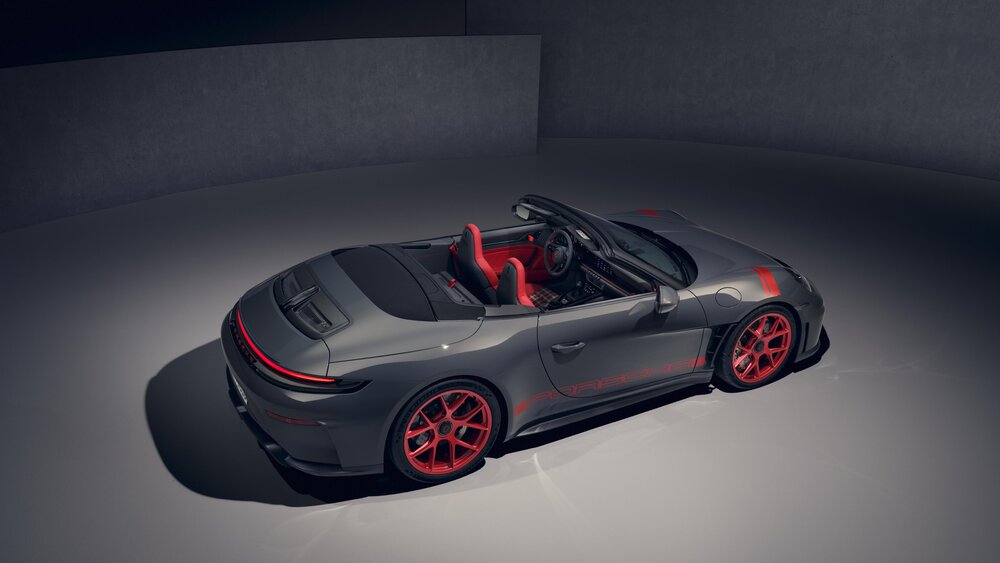
Beauty is subjective. The Speedster's double-bubble tonneau cover and chopped windshield gave it a silhouette that referenced the 356 — a design statement as much as an engineering one. The S/C is more restrained: a 911 cabriolet profile with the GT3's functional aero, CFRP hood, carbon fenders, and lightweight doors borrowed from the 911 S/T. The Speedster was drama. The S/C is coherence. Some will prefer one. Some the other. Both are correct.
What the purists get wrong
The objection writes itself: removing the roof compromises structural rigidity, adds weight, and dilutes the GT3's motorsport purpose. All true in the narrowest technical sense. The S/C weighs 62 kg more than the GT3 coupe — 1,497 kg versus 1,435 kg. The body is measurably less stiff without a fixed roof. A convertible will never match a coupe's torsional rigidity, and torsional rigidity matters at the limit.
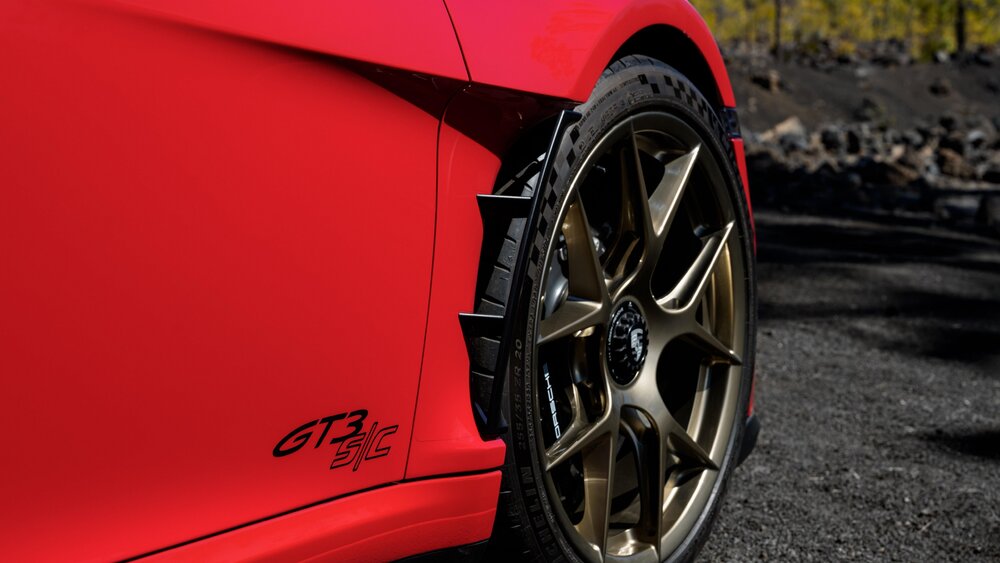
But Porsche did not simply unbolt the roof and call it a day. The S/C's fabric hood uses integrated magnesium structural elements — the same lightweight metal used in the center-lock wheels — to maintain rigidity while keeping weight down. The PCCB ceramic brakes are standard, saving over 20 kg compared to cast iron rotors. The CFRP hood, fenders, and doors come directly from the 911 S/T program. Carbon fiber is used for the rear anti-roll bar, the connecting links, and the underbody panel beneath the rear axle. Even the door panels use S/T-specification lightweight construction with carbon-fiber pull handles. Porsche did not just remove a roof — they re-engineered the car around the absence of one.
And when will a driver actually notice the rigidity difference? The honest answer is almost never. On public roads — where every GT3 S/C will spend the overwhelming majority of its life — chassis rigidity is not the limiting factor. Tire grip is. Driver skill is. The speed limit is. The difference between the coupe's torsional stiffness and the S/C's shows up in data at racing speeds, in the way a chassis responds to sustained high-g loading over curbing, in the precision of body control through a fast chicane at 200 kph. These are conditions that exist on racetracks, not on the roads where this car will actually be driven.
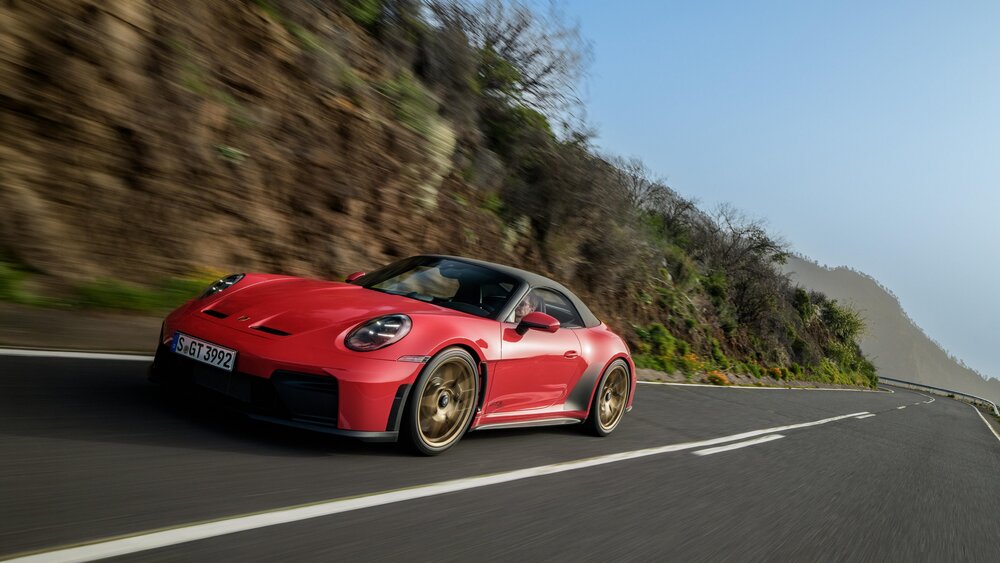
This is the distinction the purists miss: the GT3 is not the RS. The RS is the track weapon — stripped, aggressive, optimized for lap times above all else. The GT stands for Gran Turismo. Grand touring. The GT3 has always been the car that bridges the gap between Porsche's motorsport engineering and the real world — fast enough for a track day, refined enough for a cross-country drive. The S/C leans further into the grand touring side of that equation, and that is not a compromise. It is a choice. The right choice, for a car whose greatest moments will happen on a coastal road at sunset with the top down and the flat-six singing behind you, not on the Nordschleife chasing a lap record that exists only on a spec sheet.
The roof was never the point. The engine is the point. The gearbox is the point. The connection between driver and machine is the point. The GT3 S/C keeps all of that and adds the sky.
The verdict
The 911 GT3 Sport Cabriolet is not a diluted GT3 — it is a GT3 that finally acknowledges what most of its owners actually do with the car. They drive it on beautiful roads, chasing the sound of a flat-six at full voice. The S/C removes the roof and makes that experience complete. The MA1.75 — with its six individual throttle bodies, solid lifters, dry-sump lubrication, and 9,000 rpm redline — is a masterpiece that deserves to be heard without a headliner in the way. The six-speed manual is the only transmission offered, a statement of intent in a world drowning in paddle shifters. The 911 S/T's carbon body panels and magnesium wheels keep the weight to 1,497 kg — lighter than every other open-top 911. And unlike the Speedster, you can actually buy one without a six-figure markup or a relationship with your dealer's allocation manager. The GT3 S/C is not a step down from the coupe. It is, in every way that matters to the driver, an upgrade.